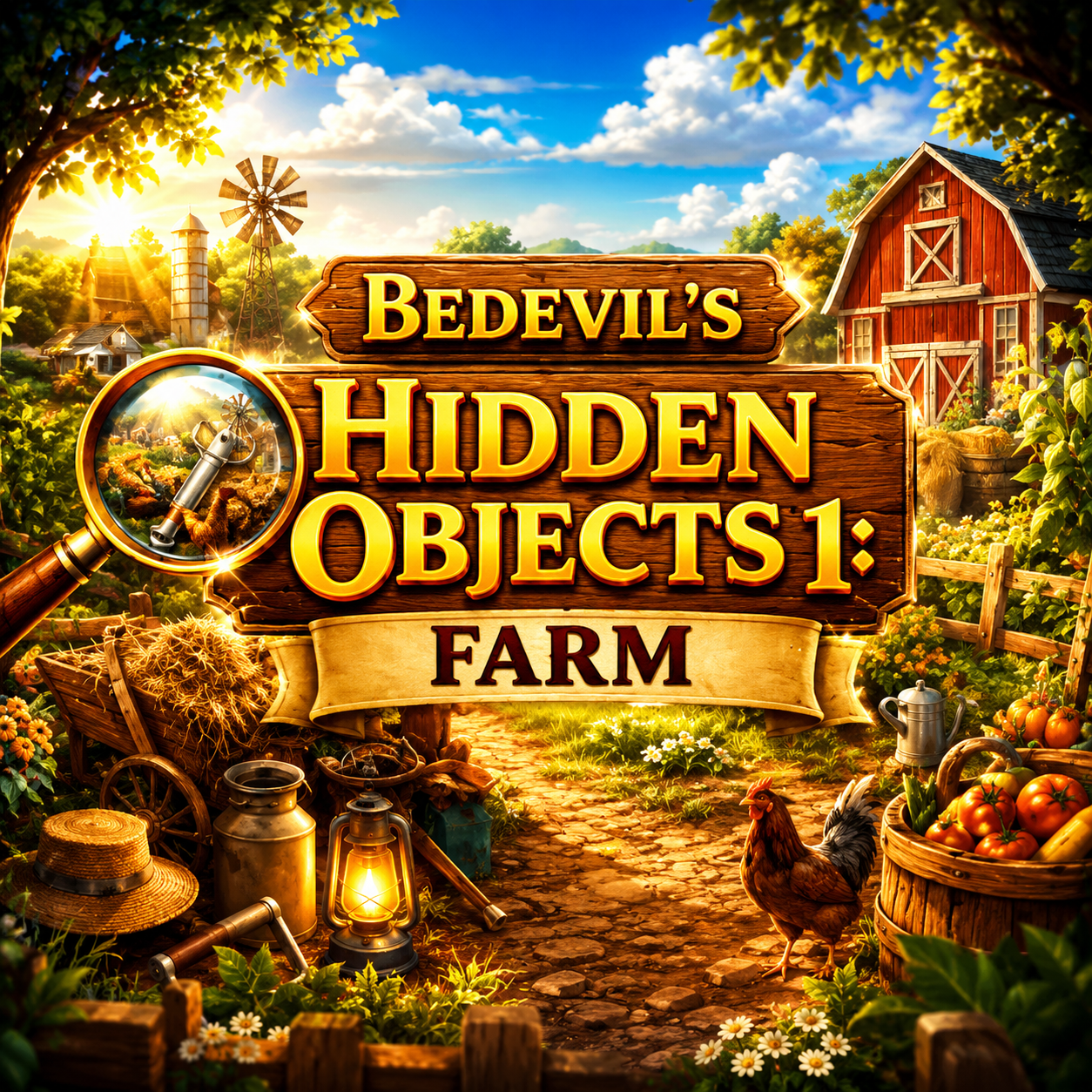
Bedevil’s Hidden Objects 1 – Farm is like stepping into a tranquil countryside space full of hidden details. Players are immersed in farm scenes that seem familiar but are arranged like a visual labyrinth.
A Relaxing Yet Profound Experience
The game feels more like deciphering a vivid picture than simply searching for objects. The farm setting, seemingly simple, is filled with layers of overlapping details. Encountering scenery that is intricately crafted with things is what players may expect. The game slowly reveals hidden elements through the use of color, shadow, and light. The items on the list don't stand out but often blend into the surrounding environment. You need to carefully observe each area instead of just quickly scanning the whole scene. The game encourages a systematic search method, from the general to the specific, to avoid missing small objects. The challenge doesn't create overly strict time pressure but still includes a countdown timer to assess performance. Scenes such as the wooden shed, fields, and tool shed all become settings containing multiple layers of secrets.
Strategic Observation Thinking
Bedevil’s Hidden Objects 1 – Farm uses an extremely intuitive control system, primarily based on click-to-select objects. However, behind that simplicity lies a process of training organized observation skills. Perpetually comparing the shown list with the whole scenario, players have to detect suspicious locations and prioritize readily accessible spots. Processing visual information quickly but accurately is key to completing the level effectively. When encountering difficulties, the hint system will assist by revealing the location of an object. But the judicious use of clues is strategic because they are limited. The game tests visual acuity and assesses how players organize their search process. Small objects are often hidden in the background or blended into decorative details, making detection a subtle challenge.
Time, Rewards, And Rating System
Level completion times determine progress through the game, which results in tiers of difficulty like gold, silver, and bronze. This transforms the object-finding experience into a mildly competitive process. It encourages players to improve their speed without sacrificing relaxation. Playbacks optimize observation and reduce processing time as well as locate the object again. The challenge is therefore repetitive but not boring, as each experience has a clear goal for improvement. The reward point system motivates players to revisit completed levels to achieve higher rankings. The game doesn't force players to be perfect from the start but encourages gradual improvement.
Discover New Mysteries