Space Waves 3D pulls the player into a continuous zigzag trajectory with speed increasing progressively. The small ship speeds along in a rainbow-colored streak of light, maneuvering through narrow gaps and unexpected sharp turns.
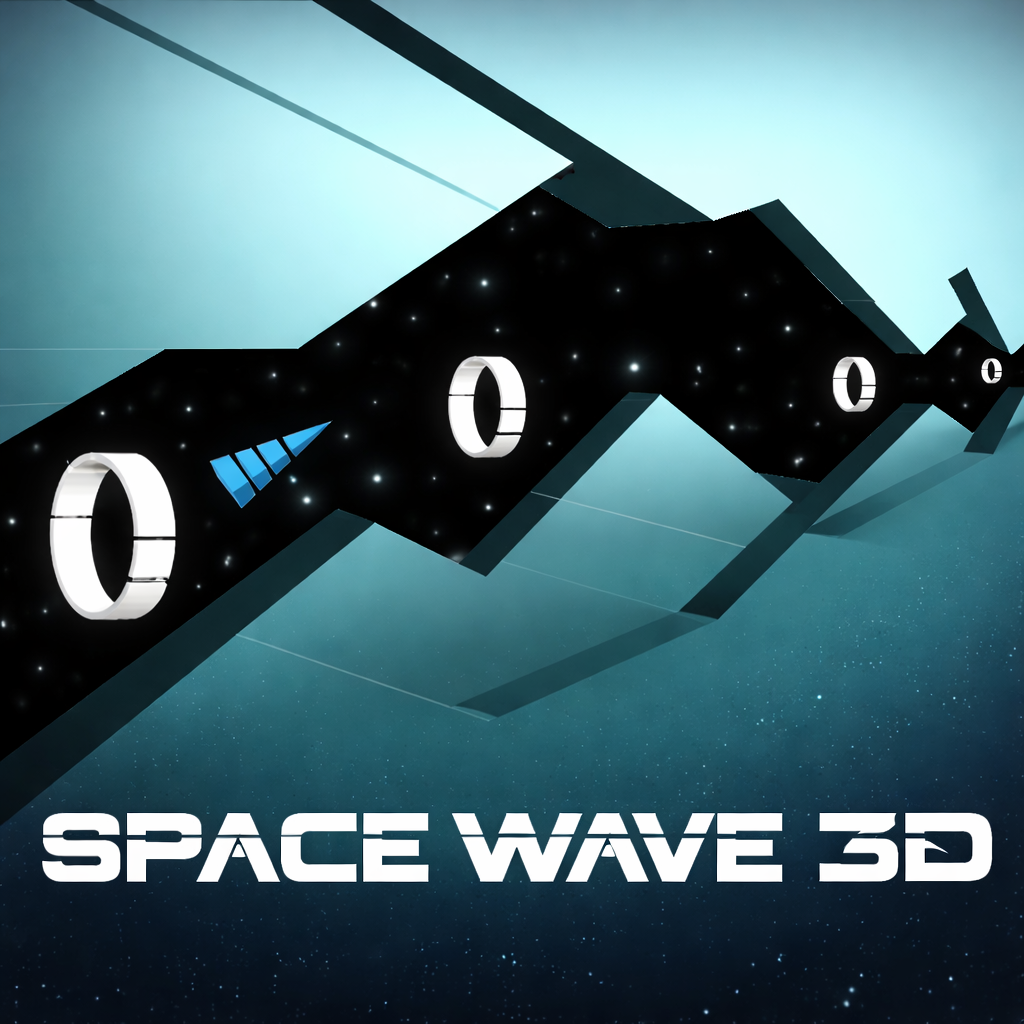
Flight Through Three-Dimensional Space
The 3D space creates a distinct depth, making distance aiming unpredictable. Each mouse click and release controls the flight path with minimal deviation. A few clicks of error are enough to cause the ship to collide with spikes or barriers. The path doesn't remain fixed but constantly bends and changes rhythmically. Pressure increases with higher speed and narrower spaces. Neon lighting effects help track movement in dark spaces. The game maintains a sense of urgency from start to finish. Each restart is a step into a whirlwind of precise control.
Dense And Ever-Changing Trap System
Space Waves 3D places traps along the flight path with high density and short spacing. Spikes appear on both the ceiling and floor, forcing the ship to move precisely with each beat. Narrow walls form small corridors, making adjustments difficult. Many sections repeat the structure but change slightly to trick reflexes. Sharp turns appear unexpectedly, requiring immediate reaction. The space does not remain stable, constantly changing to increase pressure. Players have to both dodge and predict the path ahead. This makes memorizing the structure crucial. Later levels increase the density of obstacles and reduce the space. The trap system maintains a tense rhythm throughout the entire journey.
Wave Control Mechanism Using Hand Rhythm
The challenge is to use a hold-and-release mouse mechanism to create continuous up-and-down movement. When held, the ship flies up at a diagonal angle; when released, the ship falls down along the same trajectory. This sequence of maneuvers forms a characteristic zigzag path in a confined space. Each press and hold requires precise timing to avoid a direct collision. Long-term holding causes the ship to strike the ceiling, while early release causes a plummet to the bottom. The controls are not complicated but demand high stability in each hand movement. Players need to remember the rhythm of the movement to maintain a proper flight path. There are no auxiliary operations; the entire outcome depends on a single action. The feeling of control becomes evident when maintaining a stable sequence of movements.
Games With A Wave Theme